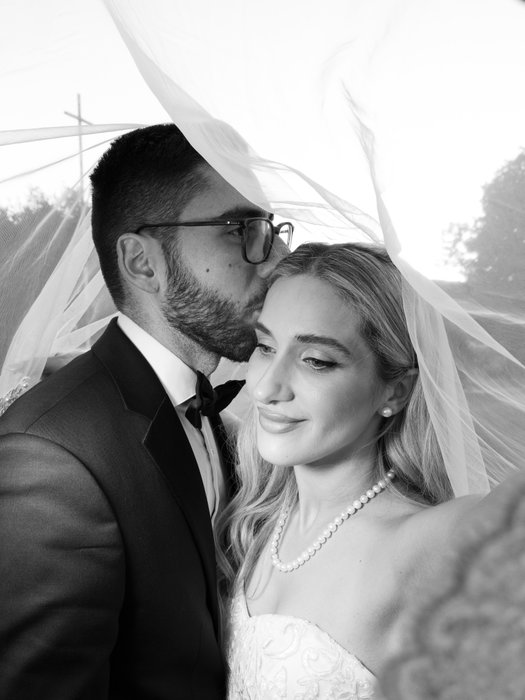
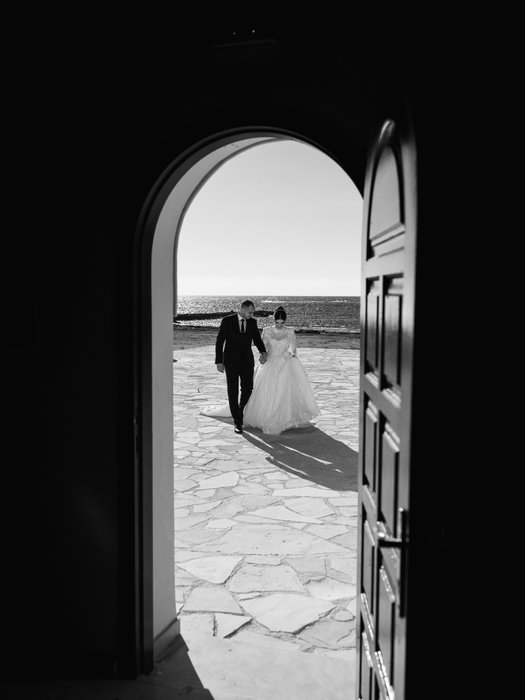
The Greek Orthodox wedding in Cyprus
The documents you need, the dates when churches do not hold weddings, the service step by step and the Cypriot customs around it, from the dressing of the groom to the money dance.
The sacrament of marriage in an Orthodox church is the heart of a Cypriot wedding, and one of the most beautiful ceremonies we photograph and film. This guide is for couples marrying in church in Cyprus, whether you grew up here, are coming home from abroad or are marrying into a Cypriot family.
Who can marry in the Orthodox Church. At least one of you must be an Orthodox Christian. The other partner must be a Christian baptised in the name of the Holy Trinity; a mixed marriage of this kind is allowed by the Church, but a partner who is not a baptised Christian would first need to be baptised Orthodox.
The church licence. The licence to marry in church is issued by the Metropolis that covers your church. Typically each of you brings a birth certificate, passport, baptism certificate and a certificate that you are free to marry, from both the Church and the State, and you sign a declaration at the licence office. Some Metropolises also ask for a thalassaemia blood test. If you have been married before, you need the divorce papers, and for an earlier church wedding the church dissolution too. Documents must be in Greek or English. Contact the licence office of your Metropolis several weeks ahead, longer if your papers come from abroad.
Is it a legal marriage? Yes. In Cyprus a wedding performed by an Orthodox priest is a legal marriage, so you do not need a separate civil ceremony. Within 45 days the marriage is registered with the Civil Registry. If one of you is not an EU citizen, the Church may ask for a civil marriage first. For use abroad, the marriage certificate usually needs an apostille.
When churches do not hold weddings. Orthodox weddings are not held during Great Lent up to Easter, from 1 to 15 August, on 29 August, on 14 September, on 5 and 6 January and in the days before Christmas. Some churches also avoid their own feast day. Always agree your date with the priest before you book anything else.
The time of the service. Church weddings in Cyprus usually start between 17:00 and 18:00 in summer, when the worst of the heat has passed, and between 15:00 and 17:00 in the winter months, when the light goes early. The service itself lasts about 45 minutes.
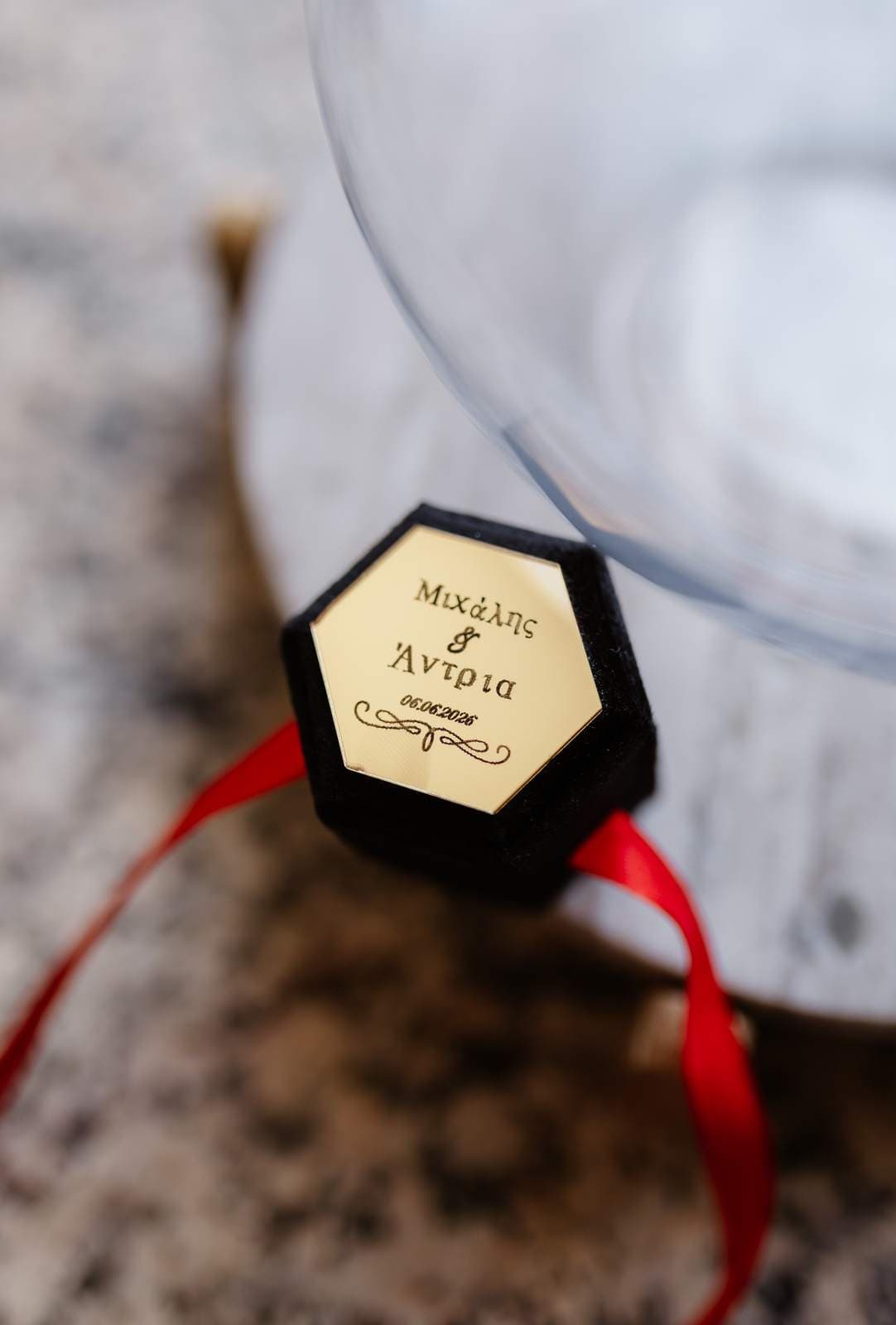
The betrothal and the rings. The service opens with the betrothal. The priest blesses the rings and makes the sign of the cross with them over the groom and the bride, and the koumbaros or koumbara exchanges them three times between your fingers. The rings are worn on the right hand.
The candles and your hands. You each hold a lit candle, the lambades, for the whole service: Christ as the light that guides your marriage. The priest then joins your right hands, and they stay joined until the end.
The crowns. The moment everyone waits for. The priest places the stefana, two crowns joined by a ribbon, on your heads, and the koumbaros exchanges them three times. The crowns make you king and queen of your own home, and remind you that love means giving of yourself.
The readings and the common cup. St Paul’s letter to the Ephesians on love and respect is read, then the Gospel of the wedding at Cana. You then drink blessed wine three times from one cup: from now on you share every joy and every sorrow.
The Dance of Isaiah. Holding the Gospel, the priest leads you three times around the table while the hymns are sung, with the koumbaroi behind you holding the ribbon: your first steps as husband and wife. In Cyprus this is when the rice and petals fly, and it is one of our favourite moments to photograph.
The end of the service. The priest removes the crowns, blesses you and separates your hands with the Gospel, because only God can part them. Outside, you stand with your parents while every guest comes past to wish you “Να ζήσετε” and receives koufeta, sugared almonds in odd numbers, a wish for a life sweeter than it is bitter.
The koumbaros and koumbara. Your wedding sponsors witness the sacrament, exchange the rings and the crowns, and keep a lifelong bond with you. In Cyprus many couples have several. They are usually Orthodox Christians themselves.
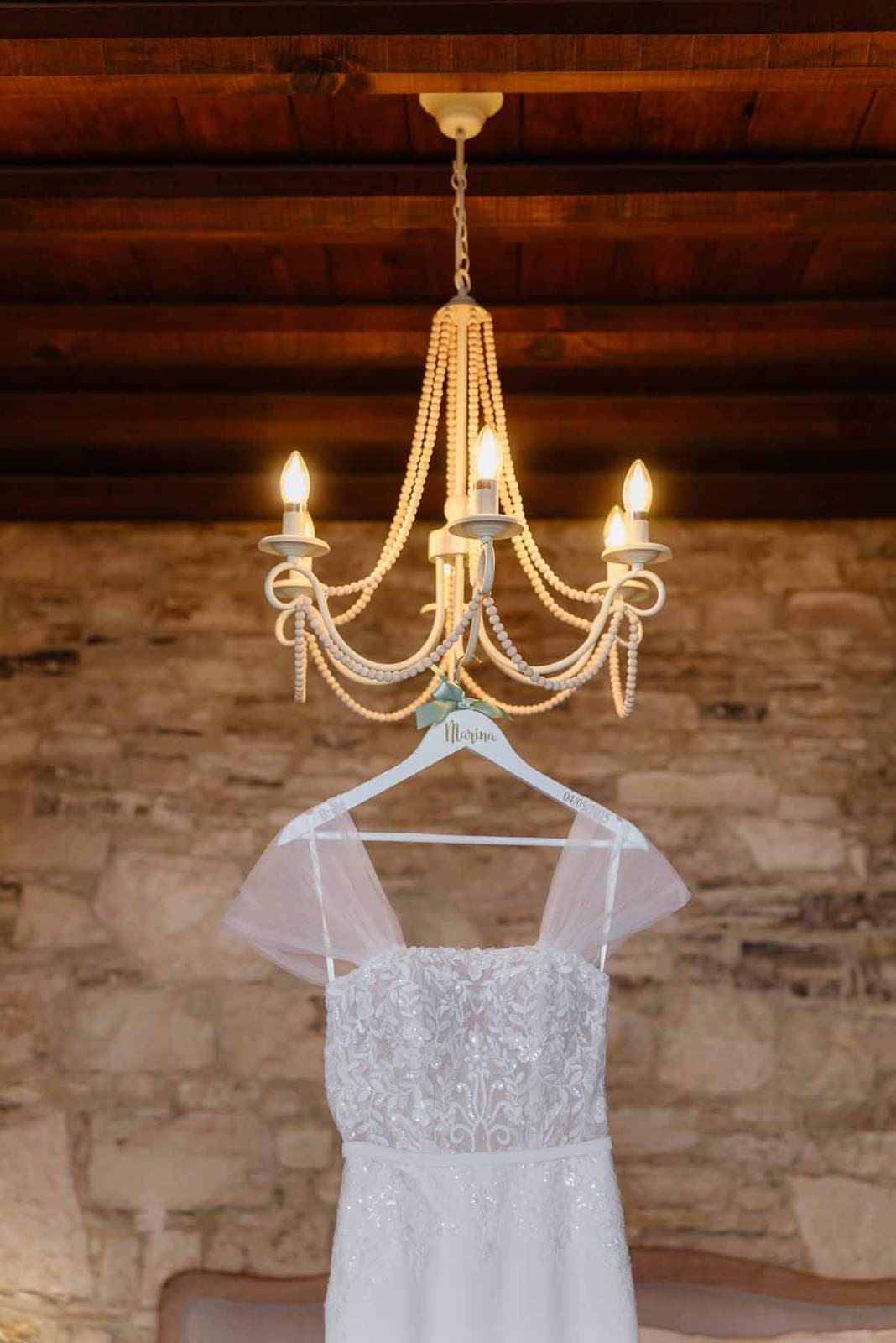
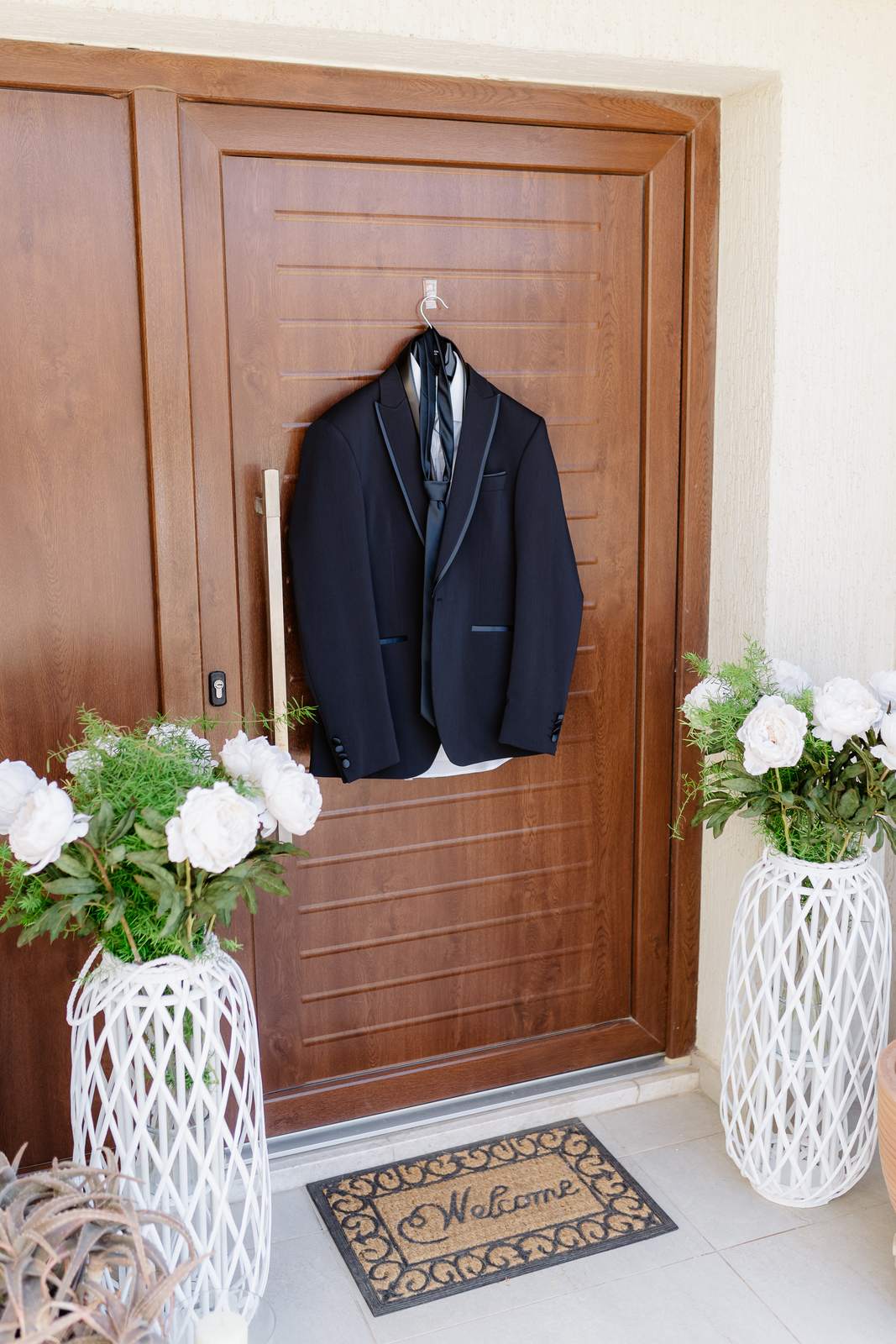
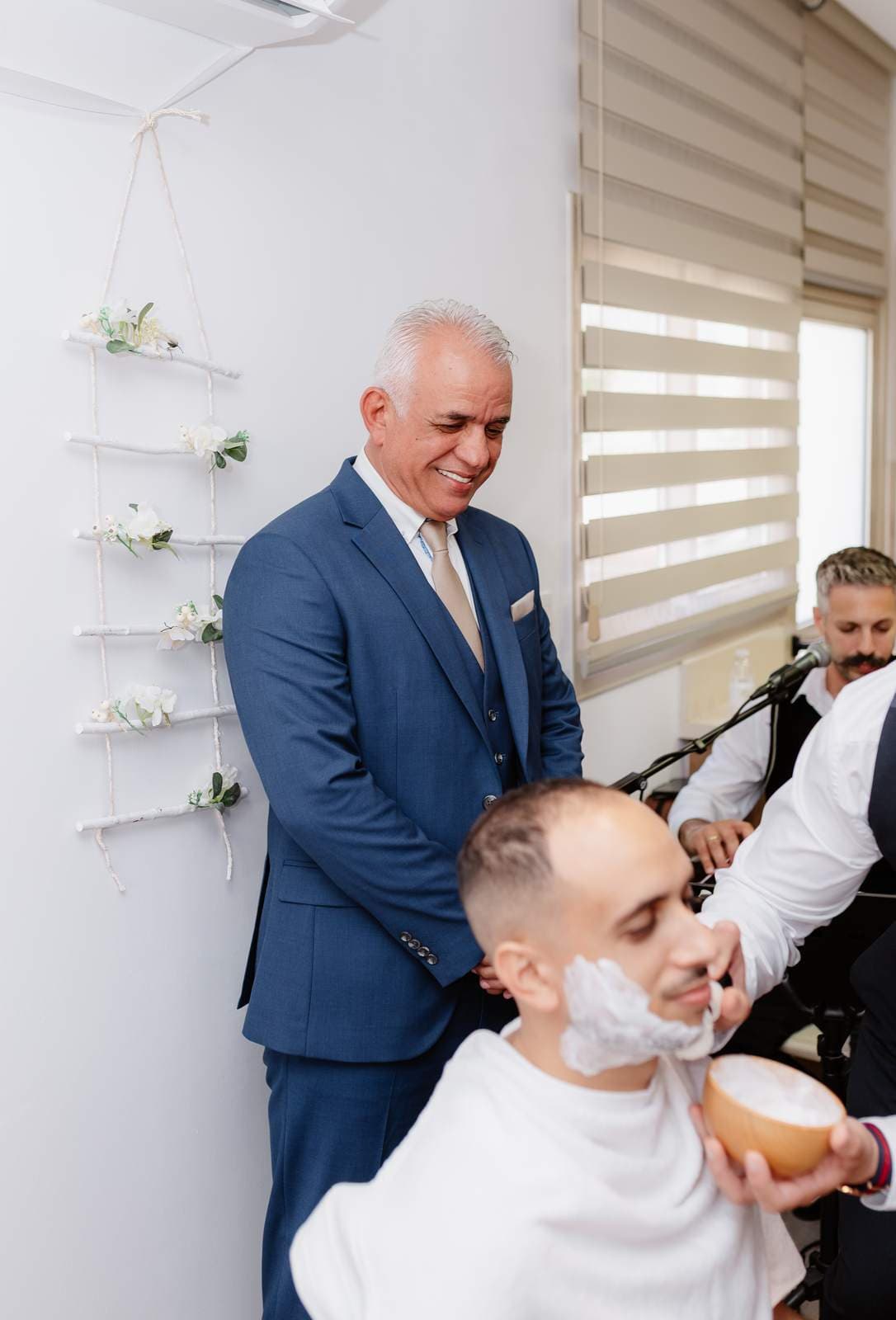
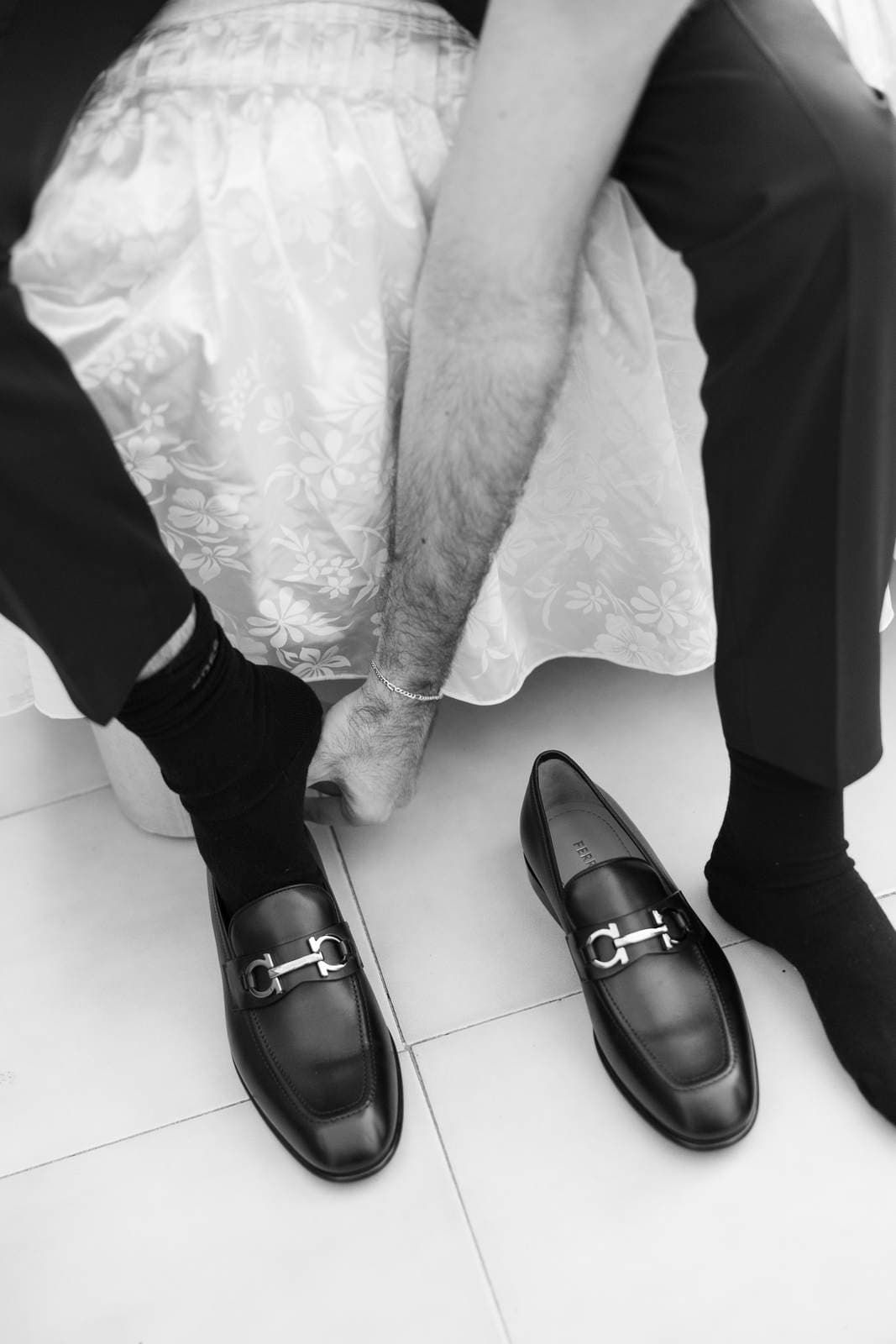
Before the church: the allamata. The day begins at home. While violin and lute play, the groom is shaved and dressed by his friends and koumbaros, and the bride is dressed by her koumbares and the women of her family. The wedding clothes are danced around the room, then the parents and close family tie a red sash around the waist three times, a blessing for the marriage, and circle the couple with incense against the evil eye. These are the photographs families treasure most, so we always start early enough to capture them without rushing.
Customs around the wedding. In the days before, many families still make the wedding bed with red thread, throw money on it and roll a baby across it for luck. In Paphos and Limassol villages, resi, wheat cooked overnight in big pots, is still prepared for the guests. At the reception, family and friends pin money on the couple during their first dance.
Photography and film in church. Every church and every priest has their own way, so it is worth agreeing the details with the priest before the day. Our photographers and cinematographers never step behind the iconostasis, keep flash to a minimum during the sacrament and move quietly so the service is never interrupted.
Church fees. Churches in Cyprus do not publish a set fee. Couples usually make a donation to the church and thank the chanter; ask your parish priest what is customary.
Planning a wedding in Cyprus? Choose your collection and see straight away whether your date is available.
Check your date